People and Products: Consumer Behavior and Product Design by Allan J. Kimmel
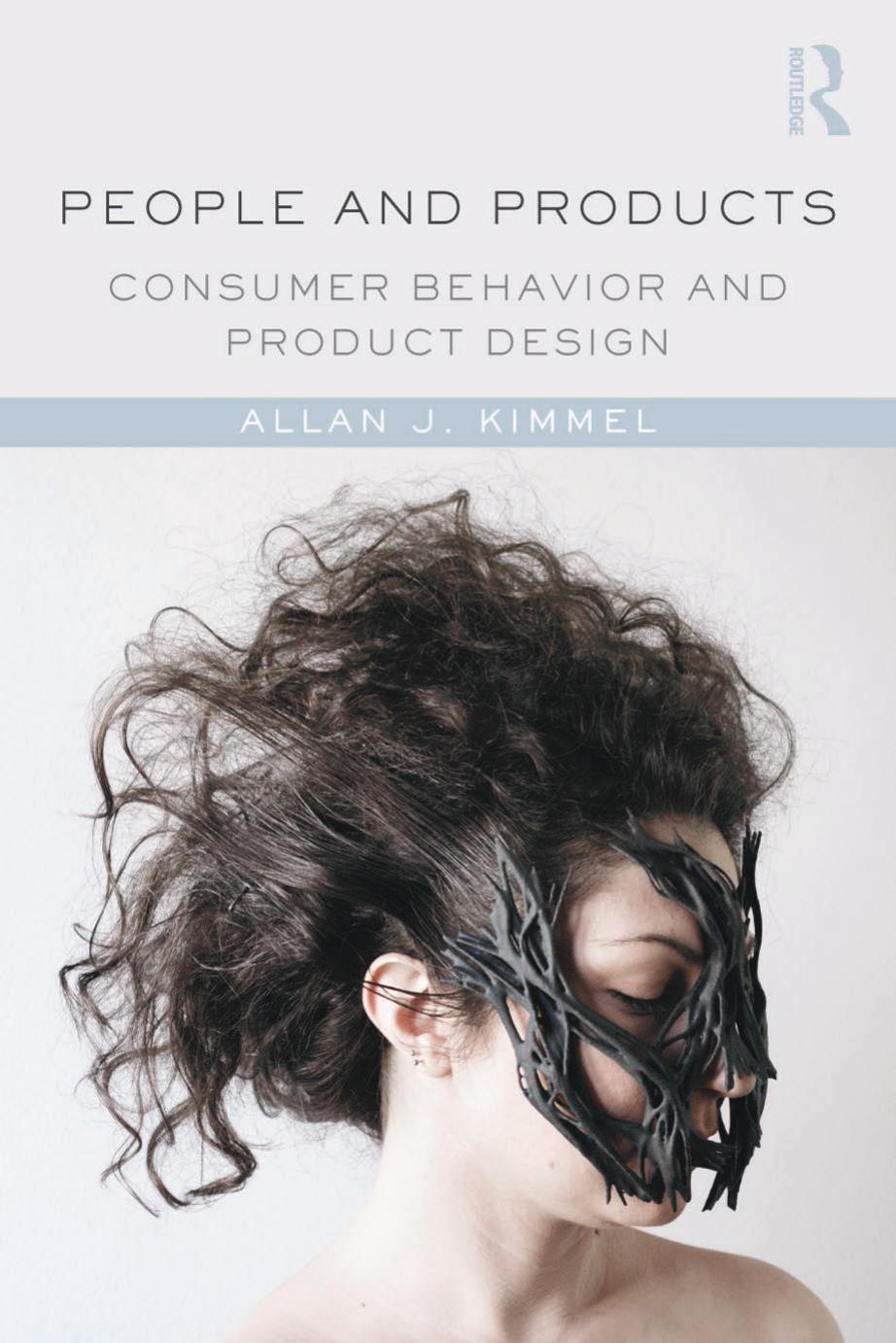
Author:Allan J. Kimmel
Language: eng
Format: mobi, pdf
ISBN: 9781317607489
Publisher: Taylor and Francis
Published: 2015-03-04T14:00:00+00:00
Capturing the illusory meaning of “design”
One reason why “design” can be considered an illusory term is that, like much technical terminology that has entered everyday parlance, it can mean various things to different people in different circumstances: it could refer to an intention, as when a person has designs on someone who takes on the aura of an object of intrigue; it might be understood as a blueprint, sketch, or graphic drawing; it could refer to an object’s aesthetics or style; or the term could be used to describe an individual’s proposal (as in “designing a plan for a new hospital or an annex to one’s house), aim (“to design a corporate strategy”), fabrication (“to design a dress or menu”), or invention (“to design a voice-activated computer program or gene-splicing technique”). Originating from the Latin verb designare, meaning to trace, describe, and plan, design is perhaps best understood as referring to means by which people seek to improve their surroundings.5 In this light, design refers to anything from the prehistoric development of making clay bowls for drinking, as opposed to cupping one’s hands, to the modification of household cleaning products so that they have a bend in the container’s neck, making it easier to clean hard-to-reach areas in kitchens and bathrooms and offering consumers greater convenience and practicality of use.
Unlike the term invention, which has retained a more or less consistent meaning over time since it was first defined in 1509 as “the action of coming upon or finding; discovery,” design has acquired new meanings over the centuries, some of which diverge from earlier ones. Originally used as a verb (“to designate or indicate”), it was not long before people began using “design” as a noun to refer to finely calibrated technical specifications or to a specific profession.6 According to Alice Rawsthorn, one consistency in its various guises is that design is typically viewed as an agent of change in the sense of helping us translate developments in different domains—such as the scientific, technological, political, and cultural—into something that might be useful or emotionally satisfying. This also is true of inventions, with the caveat that the outcome is something new: the end result of the design process may be new or a modification and improvement of something that already exists. These distinctions are evident in the case of the first computers, developed in the late 1940s by a team of scientists at the University of Manchester in the UK:
They [the British scientists] can be described as having invented the computer, but it required the work of the designers at IBM in the United States to transform an inscrutable labyrinth of wires and dials into a marketable machine that fulfilled a useful function. The result, the IBM 701, went on sale in 1952. Even so, the 701 and other early computers were enormous, prone to overheating and could only be operated by trained technicians. To this day, Apple, Samsung and other computer makers are still wrestling with the design challenge of
Download
People and Products: Consumer Behavior and Product Design by Allan J. Kimmel.pdf
This site does not store any files on its server. We only index and link to content provided by other sites. Please contact the content providers to delete copyright contents if any and email us, we'll remove relevant links or contents immediately.
Influence: The Psychology of Persuasion by Robert B. Cialdini(4745)
The Miracle Morning by Hal Elrod(4685)
The Hacking of the American Mind by Robert H. Lustig(4346)
Pre-Suasion: A Revolutionary Way to Influence and Persuade by Robert Cialdini(4189)
Unlabel: Selling You Without Selling Out by Marc Ecko(3631)
Ogilvy on Advertising by David Ogilvy(3571)
Hidden Persuasion: 33 psychological influence techniques in advertising by Marc Andrews & Matthijs van Leeuwen & Rick van Baaren(3529)
Purple Cow by Seth Godin(3174)
Who Can You Trust? by Rachel Botsman(3114)
Kick Ass in College: Highest Rated "How to Study in College" Book | 77 Ninja Study Skills Tips and Career Strategies | Motivational for College Students: A Guerrilla Guide to College Success by Fox Gunnar(3102)
The Marketing Plan Handbook: Develop Big-Picture Marketing Plans for Pennies on the Dollar by Robert W. Bly(3018)
This Is Marketing by Seth Godin(2996)
I Live in the Future & Here's How It Works by Nick Bilton(2965)
The Power of Broke by Daymond John(2939)
The Tipping Point by Malcolm Gladwell(2880)
Building a StoryBrand by Donald Miller(2872)
The 46 Rules of Genius: An Innovator's Guide to Creativity (Voices That Matter) by Marty Neumeier(2825)
Draw to Win: A Crash Course on How to Lead, Sell, and Innovate With Your Visual Mind by Dan Roam(2762)
Market Wizards by Jack D. Schwager(2682)
